General Discussion
Related: Editorials & Other Articles, Issue Forums, Alliance Forums, Region ForumsSears on verge of fading away after closing more than 3,000 stores
There was a time when Sears was as big as it gets in the retail game in the United States, and having the store’s catalog in hand … well, 30 years ago that was about like hoping on Amazon or any of today’s modern online mega retailers.
But times have been changing fast for Sears.
Earlier this year, the one-time giant was down to just eight locations, and now eight is down to five, according to a new report from The Street.
To put that in perspective: Sears once had 3,500 stores, making it the largest retailer in the country.
https://www.yahoo.com/news/articles/iconic-retailer-verge-fading-away-101539914.html
That's what vulture capitalists do to companies.
 = new reply since forum marked as read
Highlight:
NoneDon't highlight anything
5 newestHighlight 5 most recent replies
= new reply since forum marked as read
Highlight:
NoneDon't highlight anything
5 newestHighlight 5 most recent replies

hlthe2b
(113,323 posts)Those who think it is an arcane and outdated notion to have physical stores anymore better wake up.. Buying on the internet via the megalopolis, Amazon is not a given.
Not to mention, venture capitalists (vulture capitalists) are soon buying every damned house they can find, leaving normal people out in the cold and when they buy up all the rentals, we really WILL be out in the cold.

UpInArms
(54,536 posts)And they were such an imbedded part of history
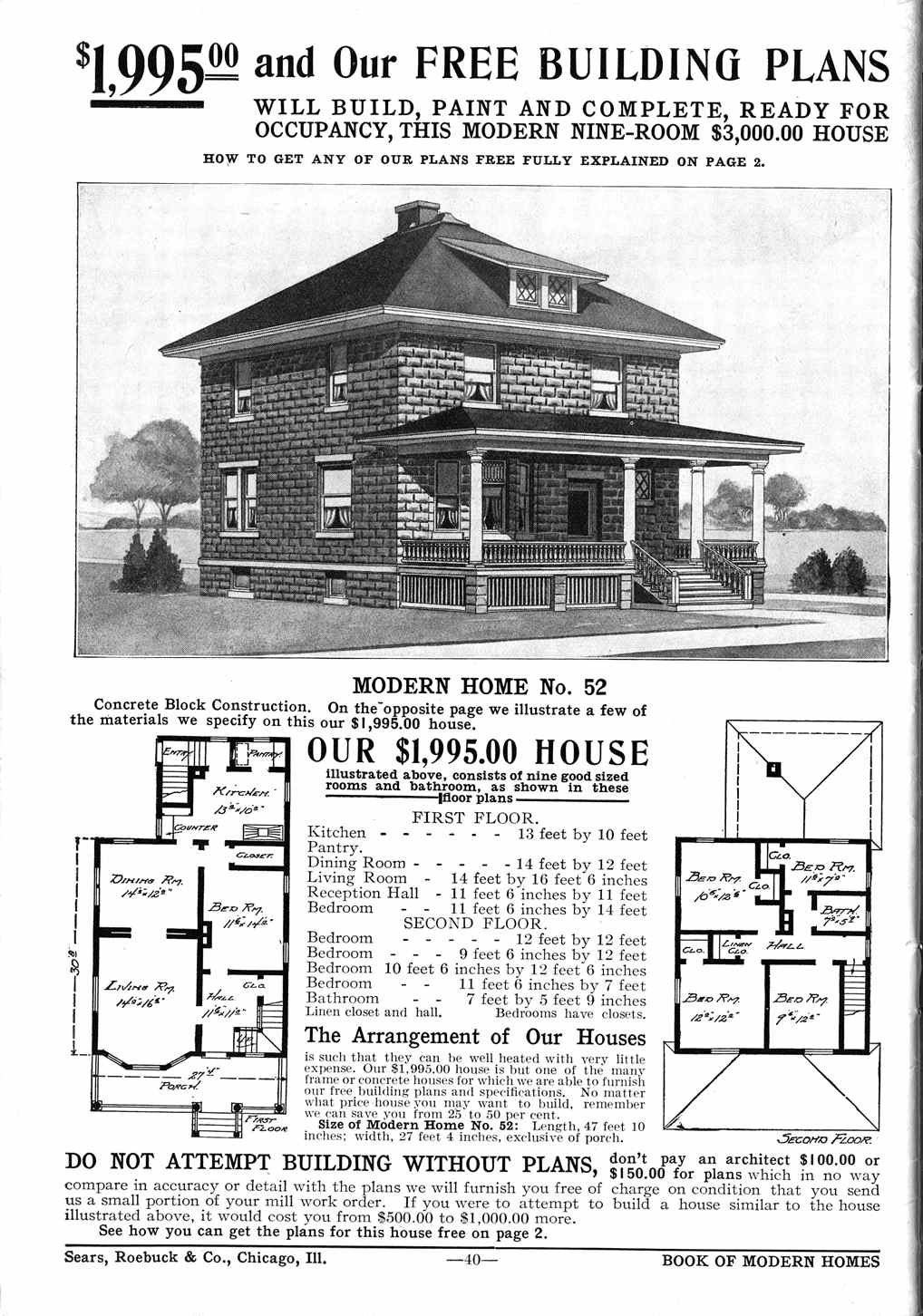
Vintage Mail Order Houses That Came from Sears Catalogs, 1910s-1940s
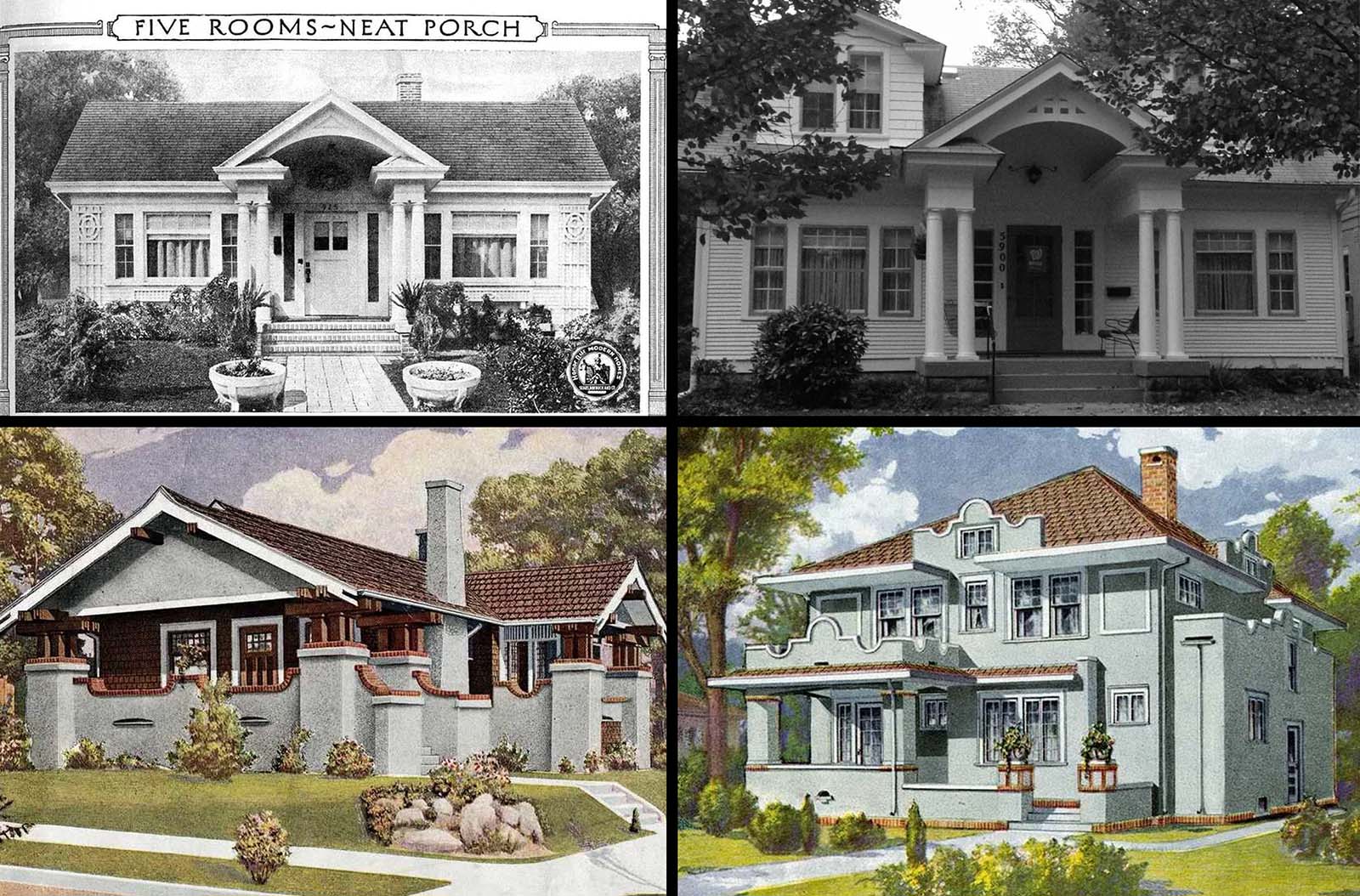
In the early 20th century, companies such as Sears, Roebuck and Co., sold tens of thousands of mail-order kit houses.
Available in a variety of styles and at a range of price points, these DIY kit houses would arrive via railroad boxcar as precut and then the buyer would have them assembled.
From 1908 to 1942, Sears sold more than 70,000 of these houses in North America, by the company’s count. Sears Modern Homes were purchased primarily by customers in East Coast and Midwest states, but have been located as far south as Florida, as far west as California, and as far north as Alaska and Canada.

msongs
(73,329 posts)
zeusdogmom
(1,132 posts)7 of us with one bathroom. We all made it out alive and well.

dem4decades
(13,903 posts)6:30 to 6:45 every day, and when you got your turn after, it was filled with smoke. That's the way it was.

Ocelot II
(129,873 posts)Only wealthy people had multiple bathrooms. I grew up in a series of houses with one bathroom - parents and 3 kids. The last house, built in the late '40s, was added onto when I was a teenager and we finally got a little half-bath on the first floor. The 1906 house I lived in with my ex had (and still has) only one, and the place I live in now, built in 1885, had only one bathroom until I did some remodeling ten years ago. Neighbors told me that a family with 8 kids had lived in this house years ago, which blows my mind since it's quite small.

Keepthesoulalive
(2,198 posts)Before the vultures started picking at its carcass.

ProfessorGAC
(76,269 posts)• They had over a century of customers buying without touching.
• They offered practically anything through the catalog.
• The had one of the first digital financial platforms.
• They had their own bank & finance/credit structure.
• They had a mountain of name recognition.
What did they do?
Sold off the digital platform, dumped catalog sales, narrowed their selection, sold off the bank, and focused on brick & mortar.
They should have been Amazon before Amazon existed.
It should be a business school study on what upper management shouldn't do.
moniss
(8,858 posts)in high school. Great time and I loved all the different specialty catalogues in addition to the "big catalogue". I clearly remember how excited everybody was to get the Christmas catalogue every year.

Vinca
(53,627 posts)I remember paying off appliances for a few bucks a month on a Sears card. The first place you ever looked for anything was Sears. Their downfall started when the ended their Sears credit cards. Suddenly, brand loyal people were forced to get VISA or MC and started to look around. They must have had the dumbest management on the planet. The stores started closing soon after.
Ocelot II
(129,873 posts)Vinca
(53,627 posts)I bought the Beatles first LP at a Sears. If I had that unopened record now, I could probably buy Sears. LOL.
Ocelot II
(129,873 posts)They didn't make the tools but I think they might have been the main vendor. I think they are still manufactured, not sure who sells them now.

MichMan
(16,926 posts)The K Mart CEO made some very poor decisions. Seldom when two struggling entities merge does it end up being the saving grace.
Never in my lifetime would I have ever guessed that Sears and General Motors would have gone bankrupt.
bucolic_frolic
(54,588 posts)I have often asked myself.. what went wrong? This question, for me, this question goes all the way back to the 2002 bankruptcy filing. I was happily employed at Kmart when that bankruptcy happened. I remember thinking it all started with Chuck Conaway, the CEO at the time, brining Mark Schwartz on board. That, in my opinion, is the point in time where Kmart began falling apart.
Schwartz had been a Walmart executive for 16 years when Conaway brought him on board. He immediately instituted those ridiculous price wobblers as part of the "Bluelight Always" program, and those things were a complete eyesore. The customers hated them. We hated them. They were always in the way, and would often fall off the peg hooks and shelves when stocking merchandise or even when customers were going through items. I found out later on that Walmart had previously had a program that utilized similar wobblers, and that was at a point when Schwartz was still with Walmart.
_______________________________
https://www.carrcommunications.com/clips/kmart-published2001-12.pdf This is an ultimate in depth look at Kmart, 2001, when Conaway was appointed.
_______________________________
Eddie Lampert was chairman and CEO of ESL Investments. It was HQ in Greenwich, CT.
Conaway was COO of CVS immediately before he joined Kmart. His home base was Woonsocket, RI.
ProfessorGAC
(76,269 posts)...of his own money, and he was not a billionaire. Lost half of his own fortune.
Never should have been the CEO that had day-to-day operations. He was suited only for the finance side. CFO? Maybe. CEO, never. Total failure.
UpInArms
(54,536 posts)Rick Wagoner
The General Motors CEO who killed the original electric car is now in the electric car business
Rick Wagoner, the former CEO of General Motors who resigned under pressure in 2009, is back in the car business, joining the board of ChargePoint, which maintains a network of charging stations for electric cars.
This would normally be an uneventful appointment—industry veterans often advise promising startups—save for Wagoner’s history as the executive who killed GM’s first electric car.
In 1996, GM rolled out the EV1, an innovative battery-powered car. It was introduced in response to a 1990 California law requiring car makers to produce zero-emissions vehicles in order to continue selling conventional automobiles in the state. GM produced 1,117 EV1s, but made them only available for lease.
While limited by their small size (just two seats) and a range of less than 100 miles, the car was popular among environmentalists and celebrities like Tom Hanks and Mel Gibson.
As GM was promoting its foray into renewable vehicles, it was simultaneously lobbying to weaken the California law. When the auto industry succeeded in watering down the regulations in 2001, GM, under Wagoner, soon after terminated the EV1, citing limited demand.
But GM just didn’t stop making the cars, however; it recalled the vehicles and destroyed them, over the objections of their drivers, who offered to buy them from GM. In the documentary, Who Killed the Electric Car?, released in 2006, director Chris Paine contends GM sabotaged the EV1, fearing electric vehicles would undermine its conventional business. GM denied that accusation.

Kaleva
(40,288 posts)bucolic_frolic
(54,588 posts)It really didn't make anything. The products, American state of the art, were made for Sears and sold through their stores with various brand names. That entire system has melted down with foreign competition.

Greg_In_SF
(1,045 posts)at online shopping back when Amazon only sold books. They let themselves get passed by.
misanthrope
(9,440 posts)They suffered from a lack of vision.

Captain Stern
(2,251 posts)They basically were Amazon without the online aspect. You picked what you wanted out of a catalog, ordered it, and it was delivered to your house. They sold everything. They had the warehouses, distribution centers, etc., but they dropped the ball.
fujiyamasan
(1,454 posts)Last edited Sun Dec 28, 2025, 07:25 AM - Edit history (1)
They had everything in place. They completely blew it.

Aristus
(71,922 posts)who forced the various divisions of the company to compete with each other, instead of marshalling those divisions to compete with other companies?
One wonders where the board of directors digs up these fuckbrains. One would think a complete inability to run a major corporation would be a disqualifying factor in the hiring process.
JI7
(93,399 posts)Aristus
(71,922 posts)n/t
fujiyamasan
(1,454 posts)
The Madcap
(1,836 posts)It's almost as if they have a big neon halo over their head saying "CEO - I'm the Best!!'"
Experience failing does not, I repeat, DOES NOT, inevitably lead to success. Just look at the Orange Menace for proof of that.
JI7
(93,399 posts)
B.See
(8,109 posts)But then again I I buried them way down deep on my s-list decades ago.
SWBTATTReg
(26,157 posts)mall, was already experiencing the thralls of dying slowly. They dominated back then (in 70s), but that was when Walmart's, and other store chains started going. Sears was already seen as arrogant, didn't have a good attitude. Kind of did themselves in.

Norbert
(7,671 posts)I would page through it from the time it arrived to December 24th. For a kid like me, this was the motherlode.

maveric
(17,024 posts)My brothers and I would fight over it every year.
The ultimate wish book.
Danmel
(5,740 posts)Sad.

Jacson6
(1,852 posts)I shopped there from the 1980's until the early 2000's. They didn't modernize and do online shopping. They started out as a mail order catalog 125 years ago. You could buy the material to build a house and they would ship it to you.

Xolodno
(7,321 posts)...but several. It was a way of thinking and perpetuating it into all its leaders. The danger of "yes men".
fujiyamasan
(1,454 posts)Had they played their cards right they could have dominated or at least been a major player in online retail and e commerce. Back in the early ‘80s they co owned Prodigy (pre AOL). It includes a lot of what AOL would later feature including online shopping.
I’m not sure how they didn’t capitalize on that. I’ve read they never invested adequately in IT and when they did it was too little, too late.
BH liberal
(128 posts)ever-present in our house when I was growing up. Naturally, their Christmas catalogs were kid favorites. Shades of "A Christmas Story"...
GoCubsGo
(34,794 posts)Other than as a "home repairs" company that regularly sends spam to my e-mail. Vulture capitalists were part of their downfall, but their unwillingness to change with the public's shopping habits and tastes was a huge culprit, as well. They were gone from my town almost 20 years ago. Hell, even the mall that housed them is gone. It's hard to stay in business when the only ones using your building are seniors who use it as a walking track.
MichMan
(16,926 posts)Last edited Sun Dec 28, 2025, 09:52 AM - Edit history (1)
Failing companies desperate for any lifeline, however, do.

LPBBEAR
(645 posts)Same guy also killed K-Mart.
https://www.cnbc.com/2019/04/18/sears-sues-eddie-lampert-steven-mnuchin-others-for-alleged-thefts.html

MineralMan
(150,945 posts)in the early 20th Century. However, it was stuck in its ways and could not adapt to the digital marketplace at all.
It suffered the same fate that the local department stores suffered in another time, and became the victim of change, just as it was the winner 100 years earlier.
themaguffin
(5,034 posts)...Reagan's legacy lives on...