Welcome to DU!
The truly grassroots left-of-center political community where regular people, not algorithms, drive the discussions and set the standards.
Join the community:
Create a free account
Support DU (and get rid of ads!):
Become a Star Member
Latest Breaking News
Editorials & Other Articles
General Discussion
The DU Lounge
All Forums
Issue Forums
Culture Forums
Alliance Forums
Region Forums
Support Forums
Help & Search
Environment & Energy
Related: About this forum
El Nino conditions are present and expected to strengthen into the Northern Hemisphere winter 2026-27.
https://www.cpc.ncep.noaa.gov/products/analysis_monitoring/enso_advisory/ensodisc.shtmlEL NIÑO/SOUTHERN OSCILLATION (ENSO)
DIAGNOSTIC DISCUSSION
issued by
CLIMATE PREDICTION CENTER/NCEP/NWS
11 June 2026
ENSO Alert System Status: El Niño Advisory
Synopsis: El Niño conditions are present and expected to strengthen into the Northern Hemisphere winter 2026-27.
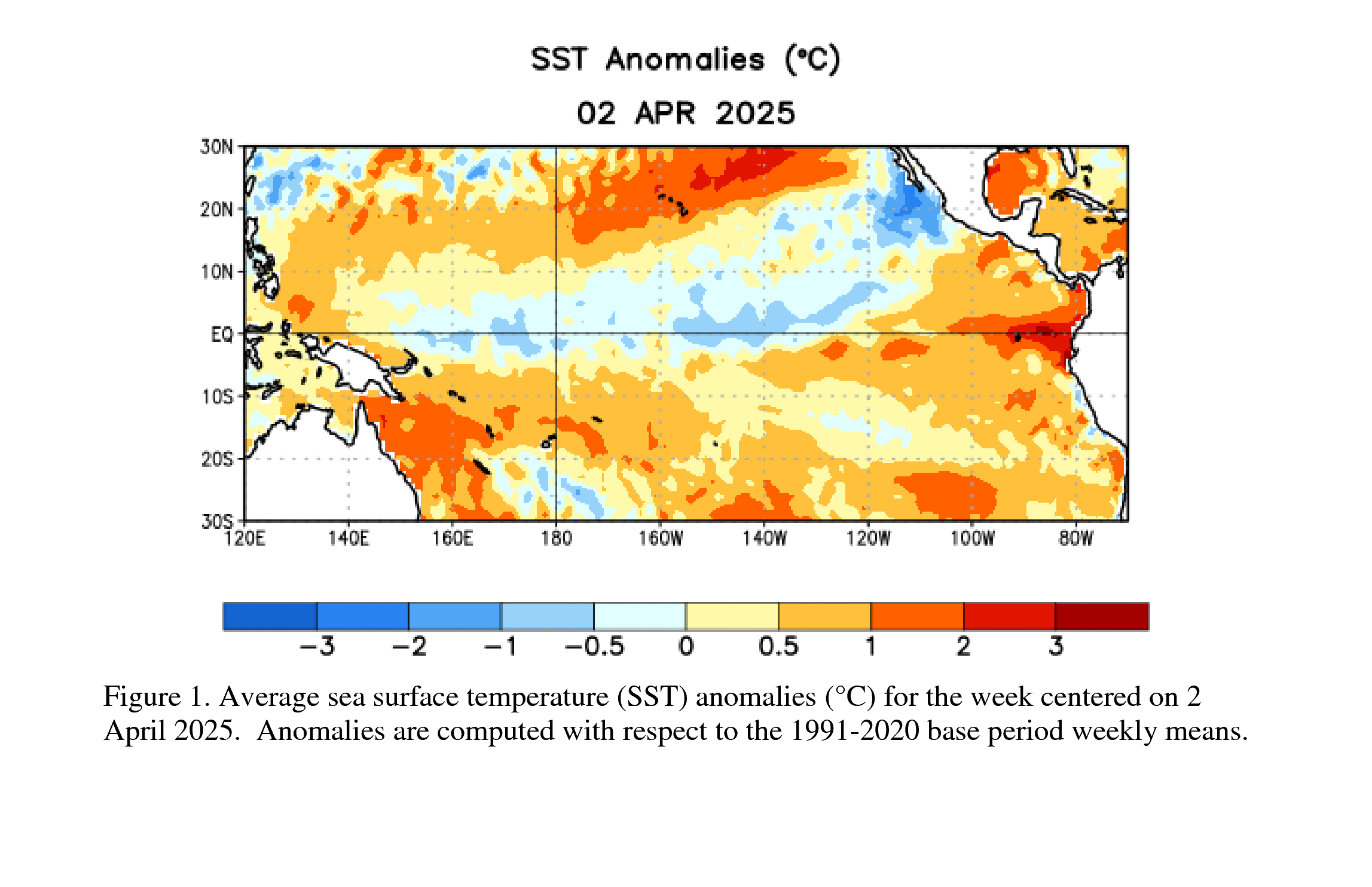
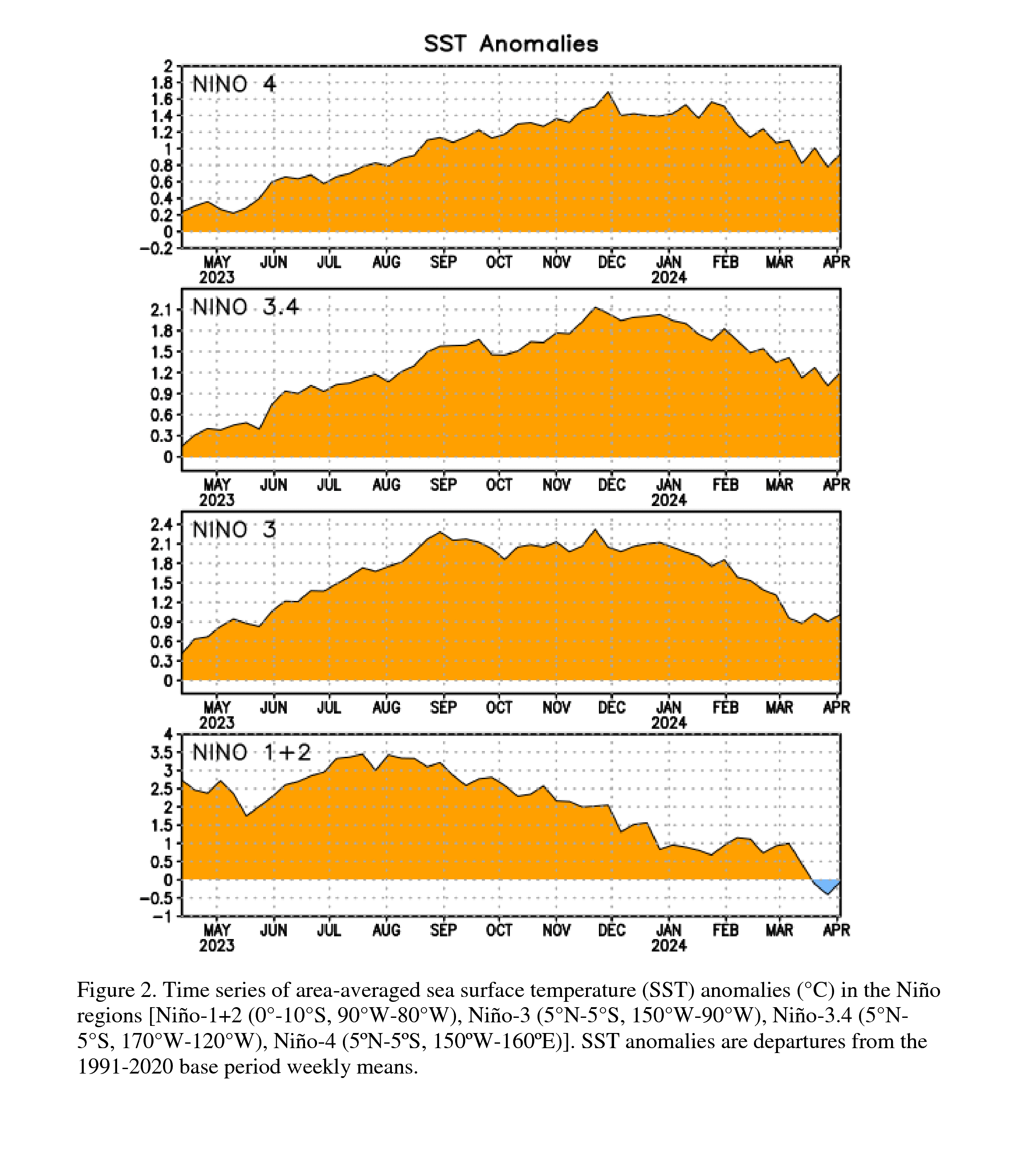
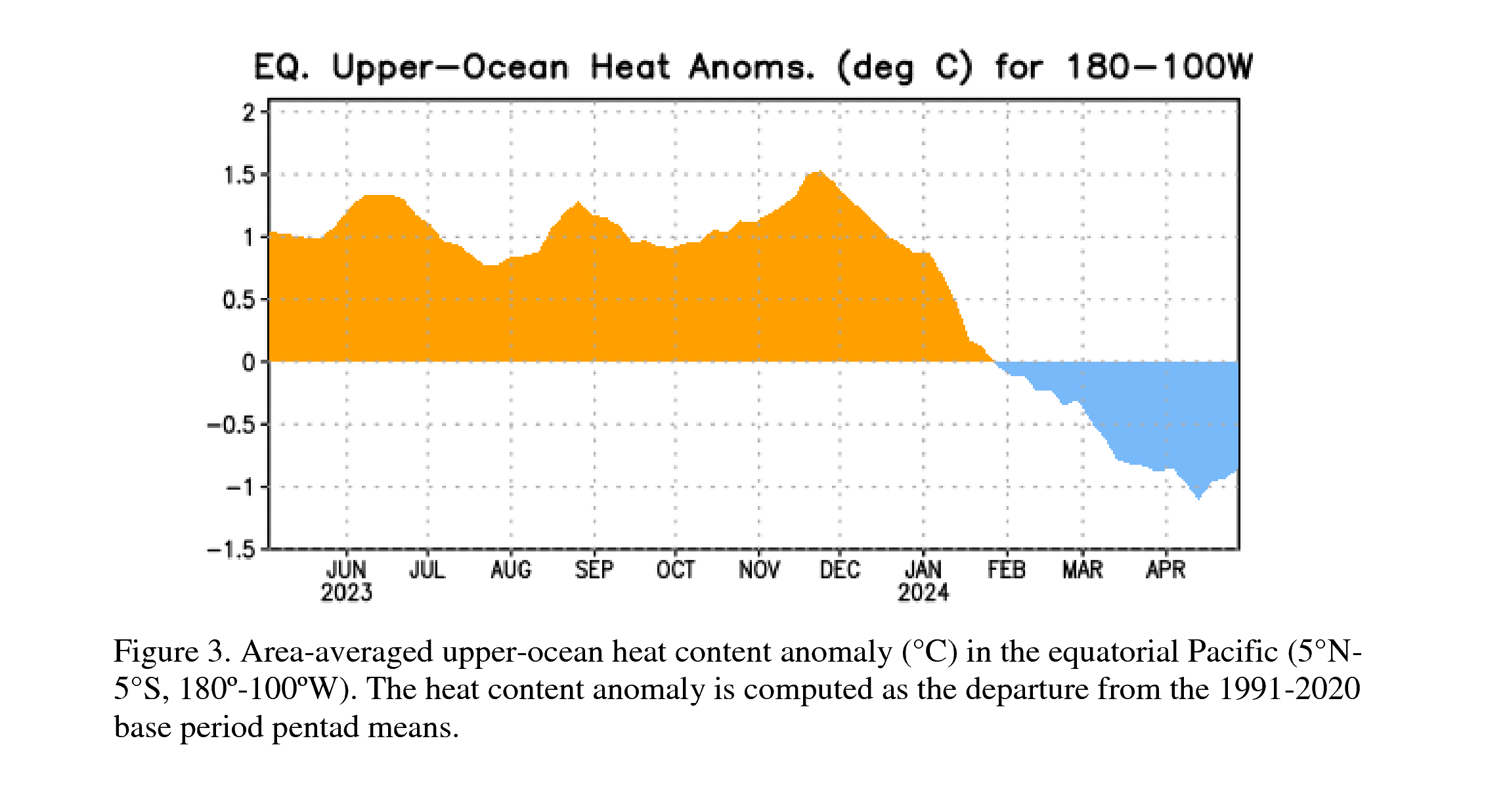
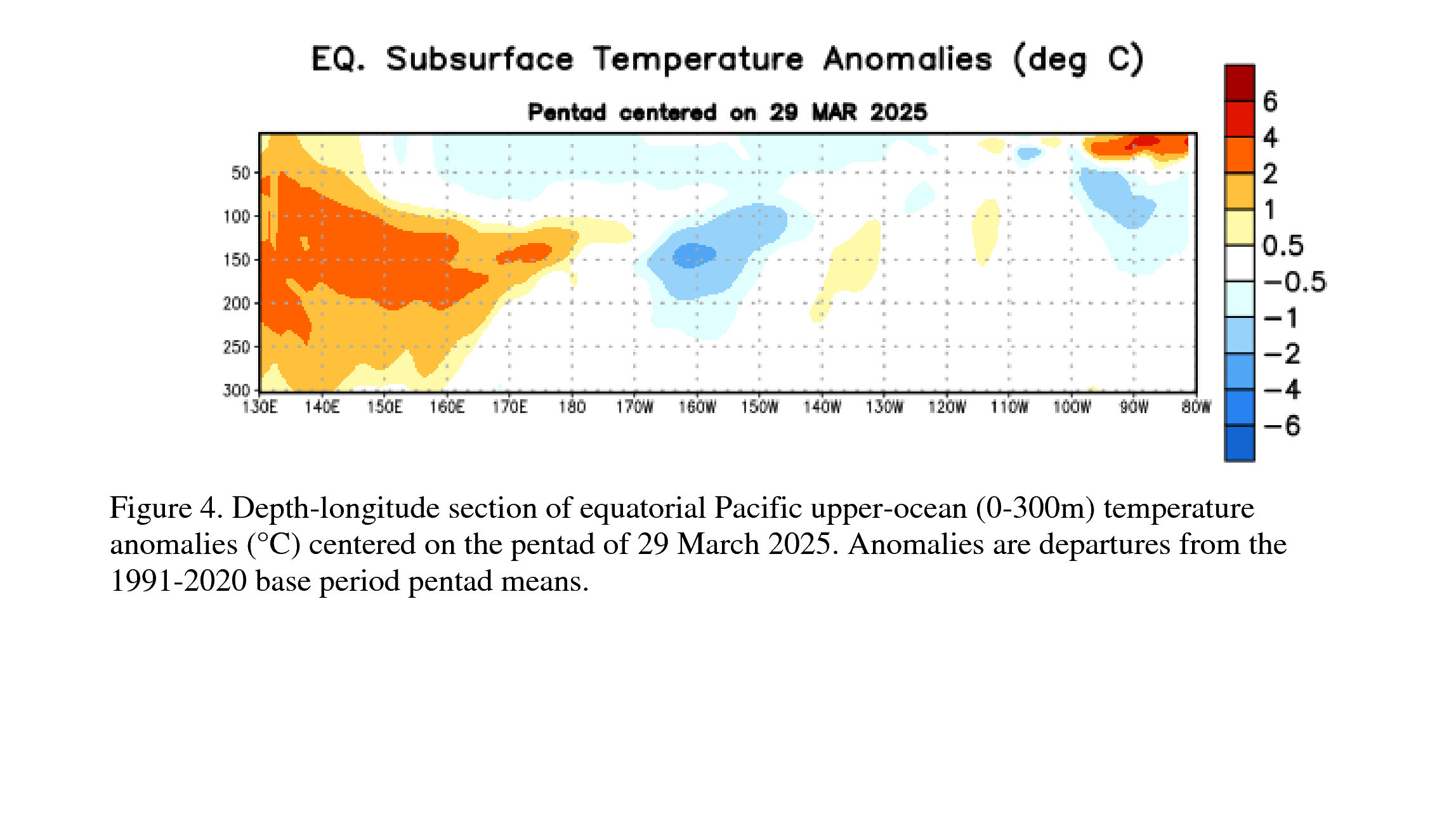
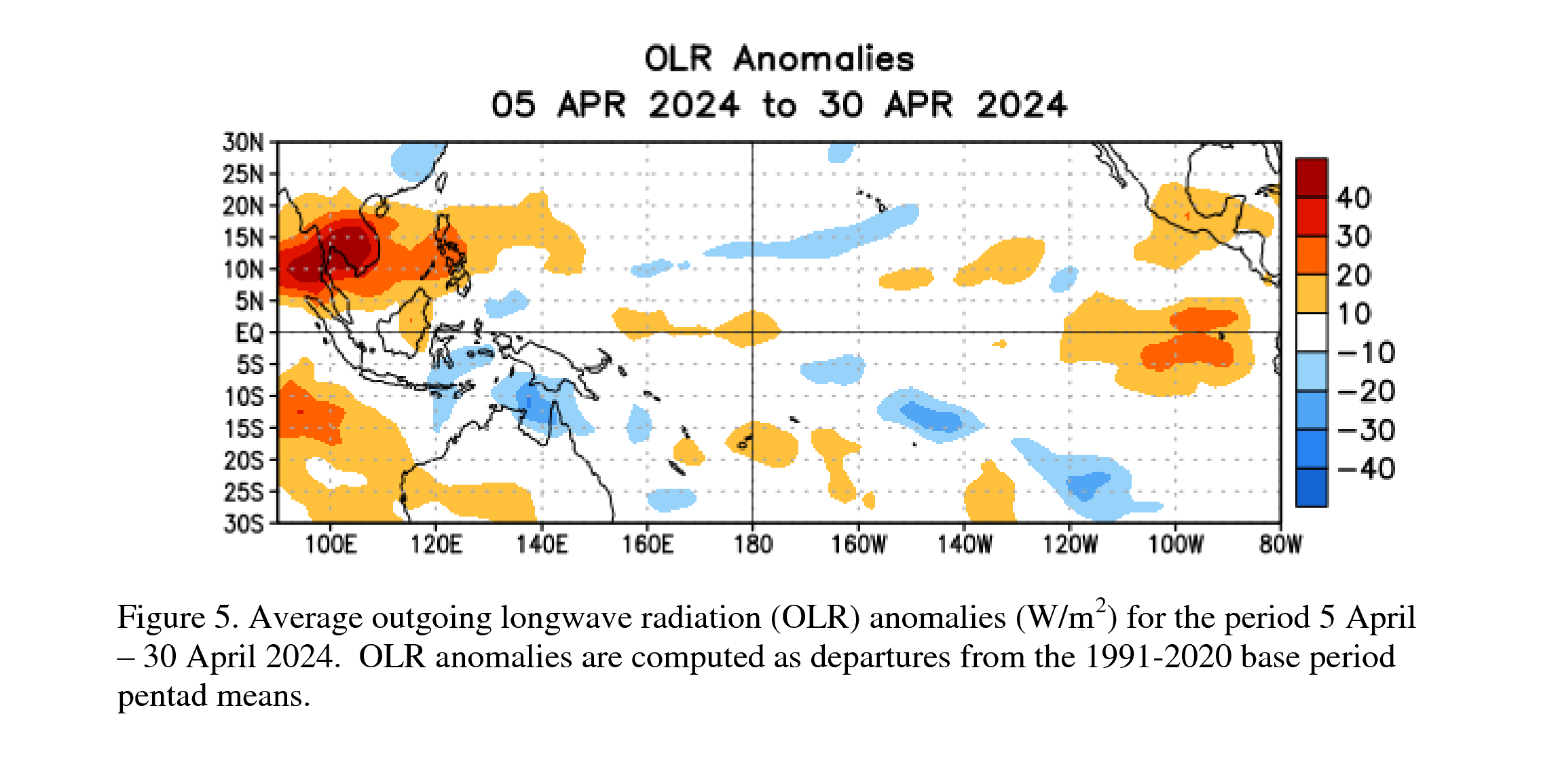
El Niño conditions developed over the past month, as shown by above-average sea surface temperatures (SSTs) across the central to eastern equatorial Pacific Ocean [Fig. 1]. The latest weekly Niño-3.4 index value was +0.7°C, with the westernmost (Niño-4) and easternmost (Niño-1+2) indices at +0.7°C and +2.1°C, respectively [Fig. 2]. The equatorial subsurface temperature index (average from 180°-100°W) decreased in the past month [Fig. 3], but significantly above-average subsurface temperatures remained in the central and eastern equatorial Pacific [Fig. 4]. Low-level westerly wind anomalies and upper-level easterly wind anomalies were evident over the central equatorial Pacific. Convection was slightly above average over the central and east-central equatorial Pacific and was near or below average over Indonesia [Fig. 5]. The traditional and equatorial Southern Oscillation indices were negative. Collectively, the coupled ocean-atmosphere system reflected the onset of El Niño conditions.
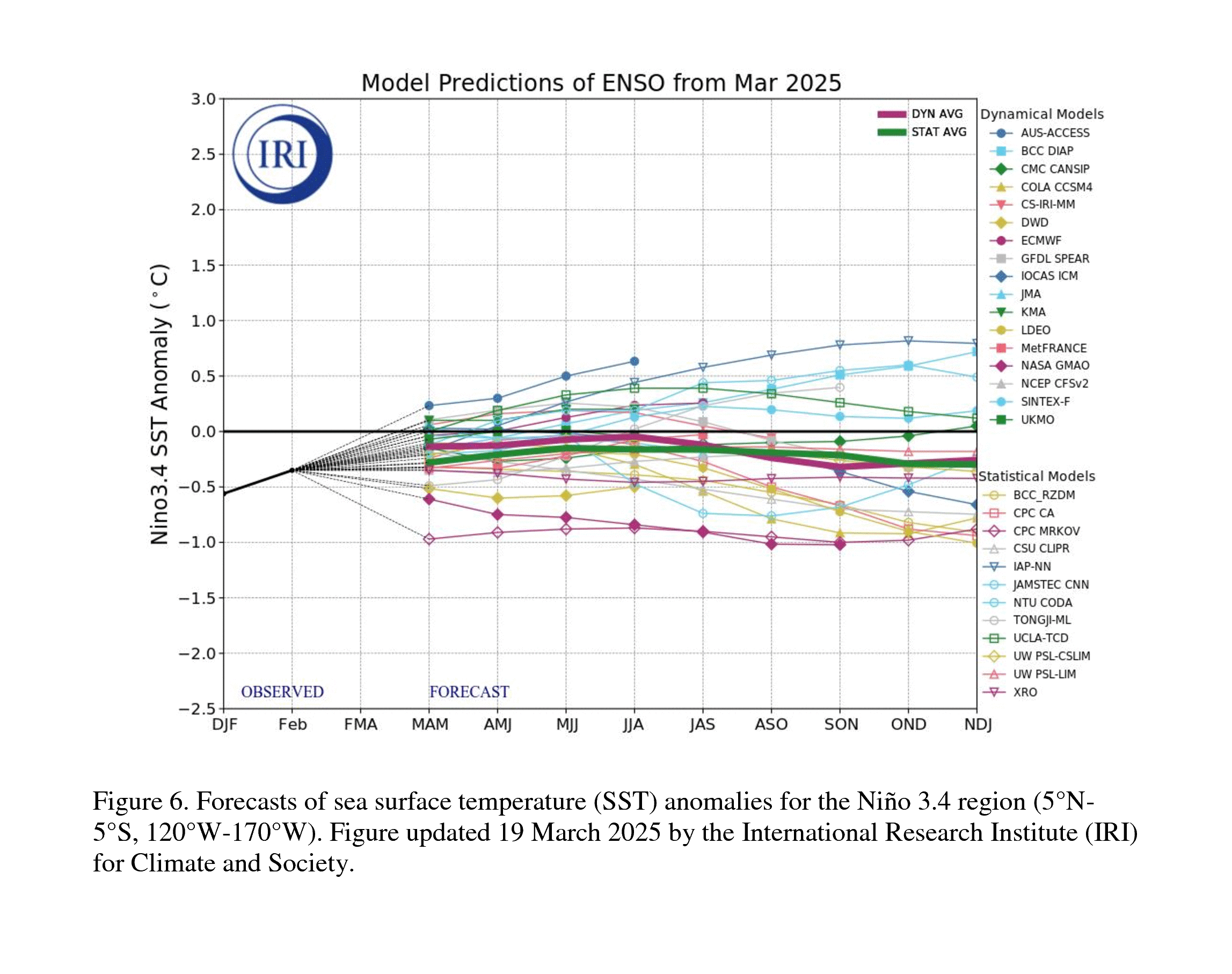
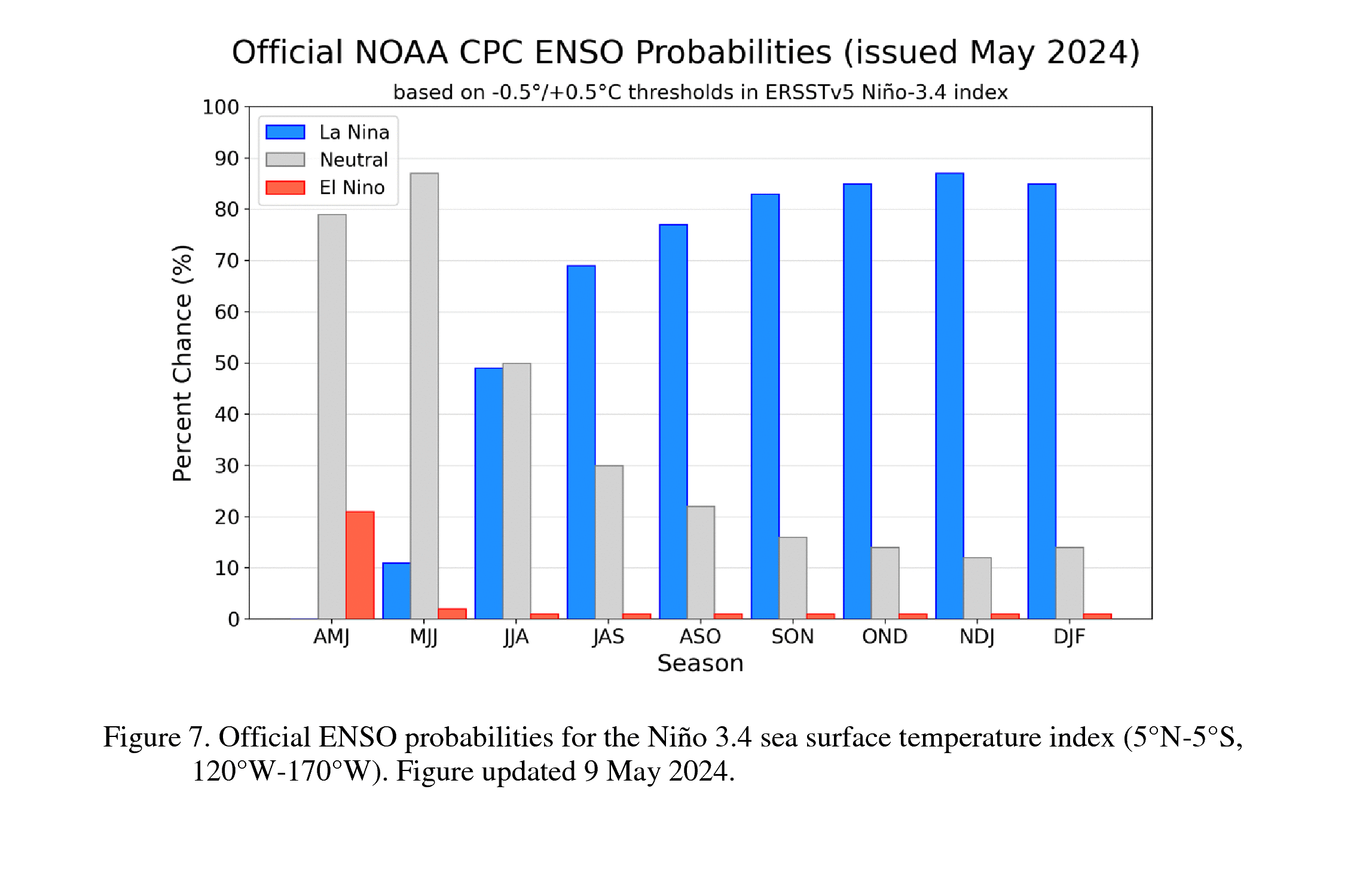
The North American Multi-Model Ensemble (NMME) average, including the NCEP CFSv2 [Fig. 6], forecasts El Niño to intensify into the Northern Hemisphere winter 2026-27. High confidence in El Niño [Fig. 7] is also linked to anomalously high oceanic heat content and expanding westerly wind anomalies across the equatorial Pacific Ocean. There is a 63% chance of a very strong El Niño during November-January [Fig. 8] that would rank among the largest El Niño events in the historical record going back to 1950. Even very strong El Niño events do not lead to the expected impact everywhere, but stronger events can more significantly tilt the odds in favor of expected outcomes (see CPC outlooks for probabilities of seasonal anomalies). In summary, El Niño conditions are present and expected to strengthen into the Northern Hemisphere winter 2026-27.
This discussion is a consolidated effort of the National Oceanic and Atmospheric Administration (NOAA), NOAA's National Weather Service, and their funded institutions. Oceanic and atmospheric conditions are updated weekly on the Climate Prediction Center web site (El Niño/La Niña Current Conditions and Expert Discussions). A probabilistic strength forecast is available here. The next ENSO Diagnostics Discussion is scheduled for 9 July 2026.
To receive an e-mail notification when the monthly ENSO Diagnostic Discussions are released, please send an e-mail message to: ncep.list.enso-update@noaa.gov.
Climate Prediction Center
5830 University Research Court
College Park, Maryland 20740
DIAGNOSTIC DISCUSSION
issued by
CLIMATE PREDICTION CENTER/NCEP/NWS
11 June 2026
ENSO Alert System Status: El Niño Advisory
Synopsis: El Niño conditions are present and expected to strengthen into the Northern Hemisphere winter 2026-27.
El Niño conditions developed over the past month, as shown by above-average sea surface temperatures (SSTs) across the central to eastern equatorial Pacific Ocean [Fig. 1]. The latest weekly Niño-3.4 index value was +0.7°C, with the westernmost (Niño-4) and easternmost (Niño-1+2) indices at +0.7°C and +2.1°C, respectively [Fig. 2]. The equatorial subsurface temperature index (average from 180°-100°W) decreased in the past month [Fig. 3], but significantly above-average subsurface temperatures remained in the central and eastern equatorial Pacific [Fig. 4]. Low-level westerly wind anomalies and upper-level easterly wind anomalies were evident over the central equatorial Pacific. Convection was slightly above average over the central and east-central equatorial Pacific and was near or below average over Indonesia [Fig. 5]. The traditional and equatorial Southern Oscillation indices were negative. Collectively, the coupled ocean-atmosphere system reflected the onset of El Niño conditions.
The North American Multi-Model Ensemble (NMME) average, including the NCEP CFSv2 [Fig. 6], forecasts El Niño to intensify into the Northern Hemisphere winter 2026-27. High confidence in El Niño [Fig. 7] is also linked to anomalously high oceanic heat content and expanding westerly wind anomalies across the equatorial Pacific Ocean. There is a 63% chance of a very strong El Niño during November-January [Fig. 8] that would rank among the largest El Niño events in the historical record going back to 1950. Even very strong El Niño events do not lead to the expected impact everywhere, but stronger events can more significantly tilt the odds in favor of expected outcomes (see CPC outlooks for probabilities of seasonal anomalies). In summary, El Niño conditions are present and expected to strengthen into the Northern Hemisphere winter 2026-27.
This discussion is a consolidated effort of the National Oceanic and Atmospheric Administration (NOAA), NOAA's National Weather Service, and their funded institutions. Oceanic and atmospheric conditions are updated weekly on the Climate Prediction Center web site (El Niño/La Niña Current Conditions and Expert Discussions). A probabilistic strength forecast is available here. The next ENSO Diagnostics Discussion is scheduled for 9 July 2026.
To receive an e-mail notification when the monthly ENSO Diagnostic Discussions are released, please send an e-mail message to: ncep.list.enso-update@noaa.gov.
Climate Prediction Center
5830 University Research Court
College Park, Maryland 20740

1 replies
 = new reply since forum marked as read
Highlight:
NoneDon't highlight anything
5 newestHighlight 5 most recent replies
= new reply since forum marked as read
Highlight:
NoneDon't highlight anything
5 newestHighlight 5 most recent replies
= new reply since forum marked as read
Highlight:
NoneDon't highlight anything
5 newestHighlight 5 most recent replies
El Nino conditions are present and expected to strengthen into the Northern Hemisphere winter 2026-27. (Original Post)
OKIsItJustMe
9 hrs ago
OP

Cha
(321,278 posts)1. Oh boy, I was in an El Nino once in
San Diego in the late 80s. Fierce winds from the Desert and then hard rain.
I hope for the best, and please prepare for the worst. 
