Pikas in decline because of warming climate
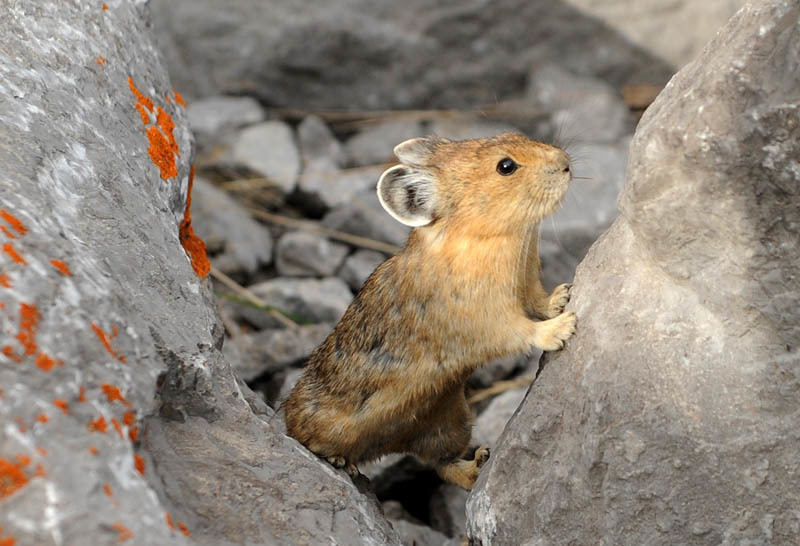
Pikas are a group of 29 species of small mammals found across Asia and in North America.
23 of these species live in China, two live in the western North American mountains, and the rest live in other parts of Asia.
Despite their looks, pikas are not rodents; they are actually related to hares and rabbits. North American pikas came from Siberian pikas who crossed the land bridge. These pikas used to live across North America, but their habitat has steadily shrunk to higher and higher elevations. Pikas eat grasses, weeds, and wildflowers, and in preparation for the winter, they will lay grasses and flowers in the sun to dry them, then store them in their den. Pikas usually live far from people, yet they are still threatened by them. Pikas on the Tibetan plateau were thought to reduce the amount of grass for domesticated animals, and so were exterminated by the government.
Because pikas have adapted to very cold environments, even being exposed for a short time for temperatures more than 78 degrees can kill them.
Because of this, in southern parts of the U.S. pikas live in higher elevations, while in Canada they can be found in much lower elevations. Because of this sensitivity, climate change is particularly damaging to the North American pika.
As temperatures rise, pikas find they have nowhere cold left to go, as they live so high they can’t simply climb higher. Even if they don’t die from the heat, vegetation changes, new predators, less snow, and more extreme weather threatens them as well. There is a bleak future ahead for the pika if we cannot find a way to slow the effects of climate change.
https://www.tosaveanimals.com/animal/pika
Video of Tibetan Fox with a Pika
https://news.cgtn.com/news/2024-06-27/Marvelous-Qinghai-Tibetan-fox-verses-plateau-pikas-1uLXTAfNimY/p.html