Gardening
Related: About this forumFun time with indoor gardening...
Couldn’t put it off anymore…time to take the sweet potato slips off the potato and start rooting them for later transference into their final growing beds. This year I’m thinking of using the very well established straw bales that will only make it through this grow season.
We started the potatoes in the last week of January. A couple methods were used.
One was putting the potatoes on their side in a bed of soil, keeping it warm and damp. This method didn’t work for us the other was the tried and true …in the water jar… this was a great method for us.
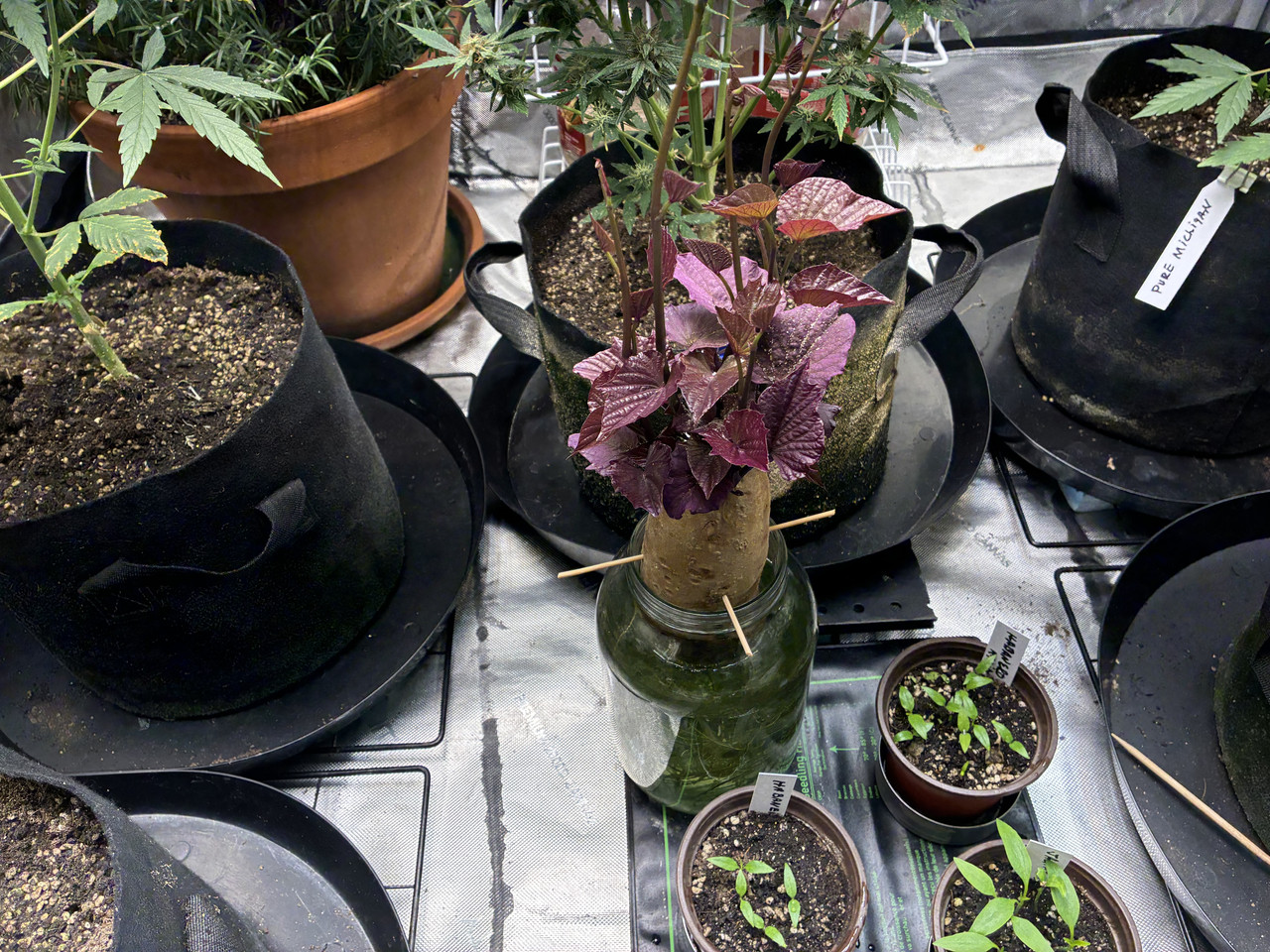
There are other projects going on but as you can see the potato is doing good.
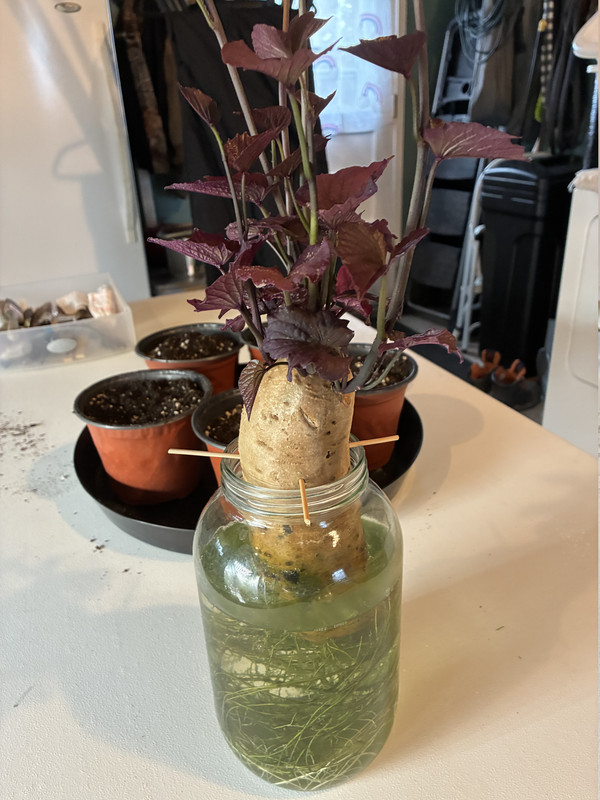
Close up of potato…the leaves are a beautiful color of purple, but it inner flesh will be a nice orange. It’s a strain called ‘Kaukura’.
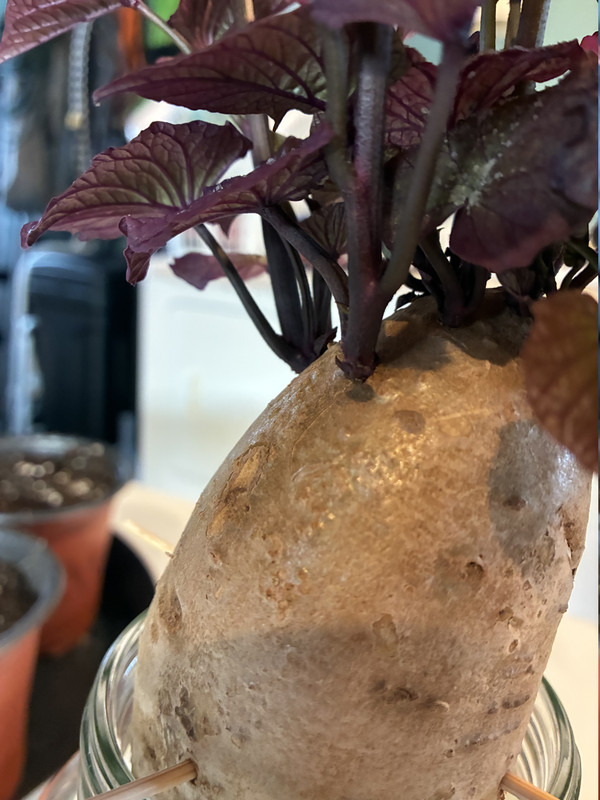
Closeup of the slips…I should get about 5 to plant. You gently twist off the slip at the potato surface and place into either water alone to get roots sprouting or plant loosely into soil watering from the bottom. We picked the soil method. I figured it would be easier to plant into the straw bales with a soil ‘plug’ holding the roots for further development.
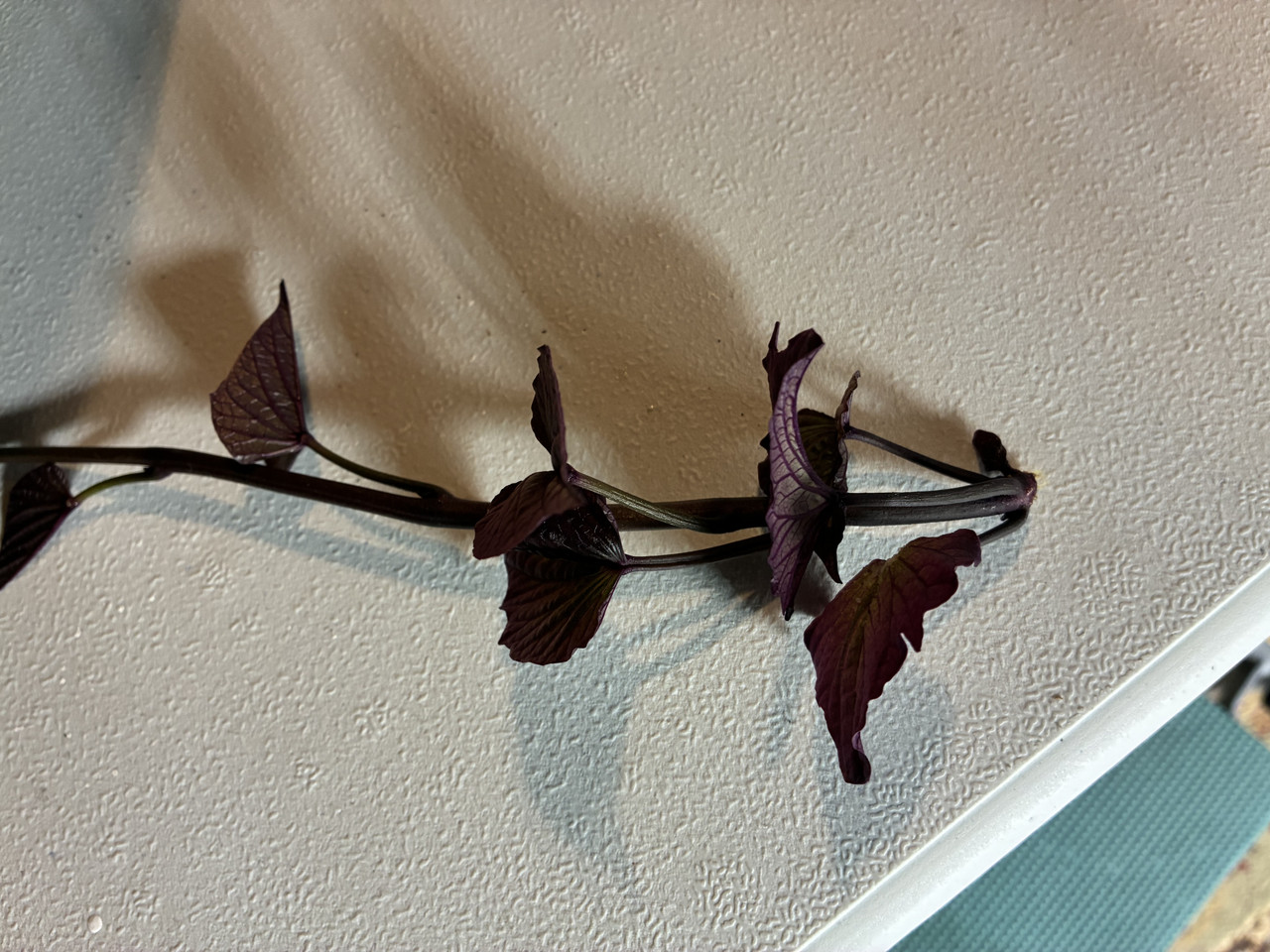
A slip getting ready for insertion into soil. The leaves will be trimmed off and only the stemlike part planted.
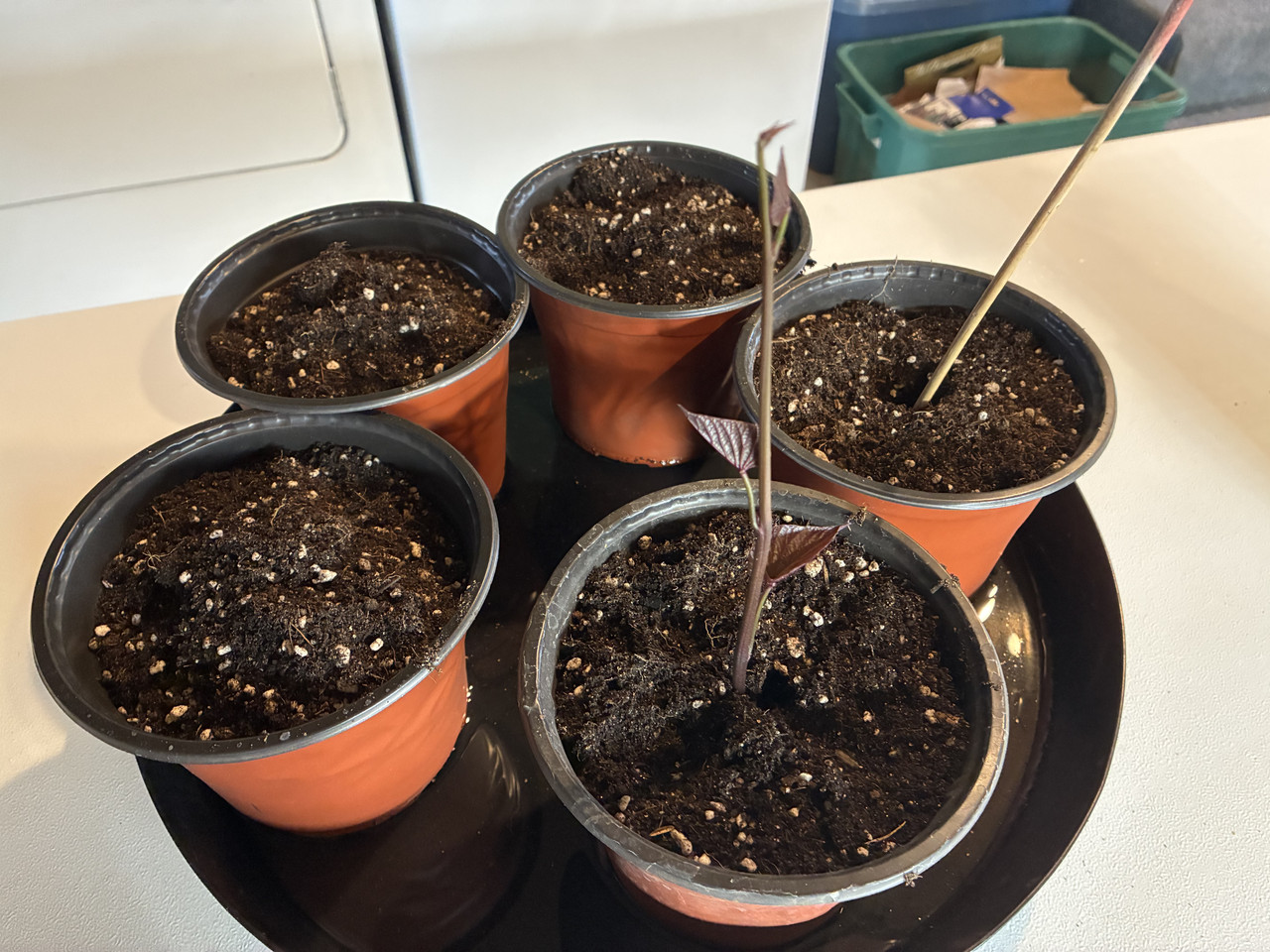
Like so..I made a hole into the soil and gently pushed the soil around the slip only enough to keep it upright. Do not pack the soil in tightly. This is all about root development.
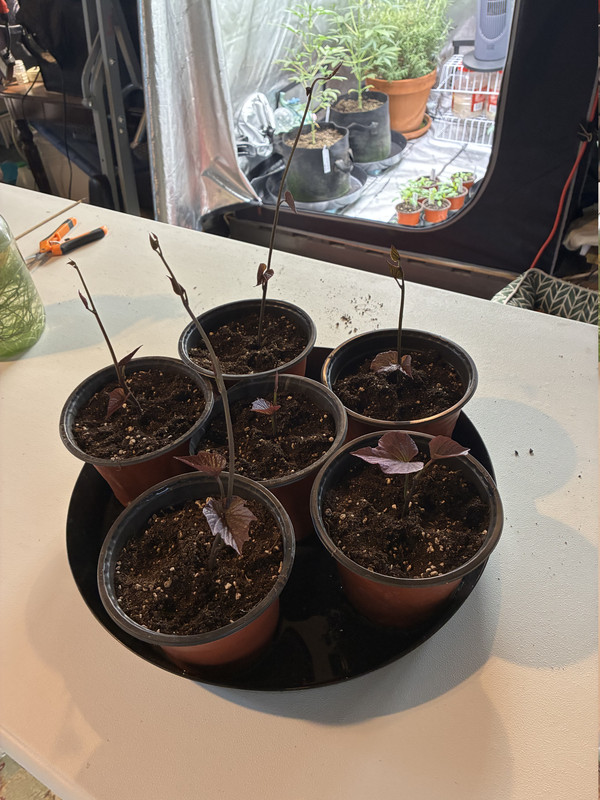
5 was good 6 even better..plus in our auxiliary tent we already have another 2 rooting.
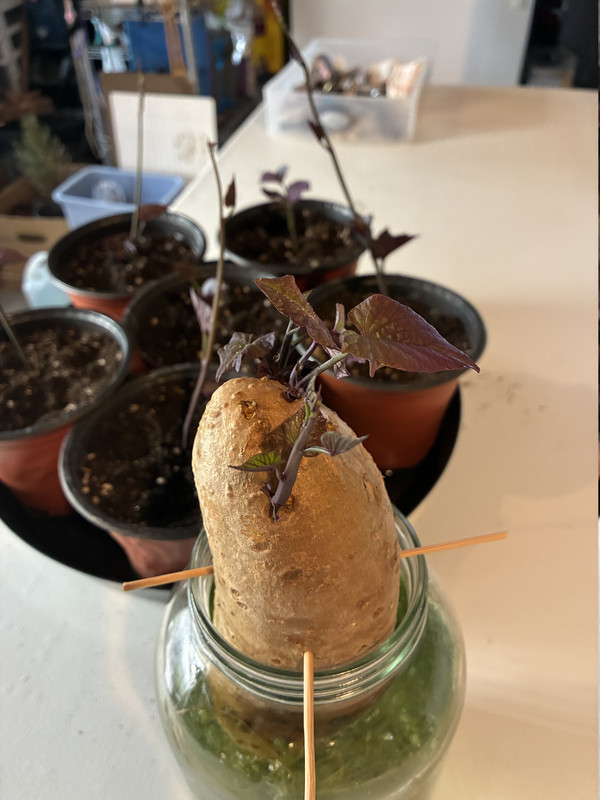
Should get a few more before planting time outside.
Been a fun project so far.
 = new reply since forum marked as read
Highlight:
NoneDon't highlight anything
5 newestHighlight 5 most recent replies
= new reply since forum marked as read
Highlight:
NoneDon't highlight anything
5 newestHighlight 5 most recent replies

SheltieLover
(81,538 posts)


Keepthesoulalive
(2,387 posts)But I need an excuse not to throw away the plastic rotisserie containers. Dirt , water and humidity give me perfect slips that go directly into their permanent home.

MiHale
(13,142 posts)Coulda been the potatoes when we laid the potatoes in soil they tended to spoil quickly. We’ve done it before years ago but these last couple years …no go. 
Tried both ways this year…water won out. Being in Michigan the ground warms slowly in the spring…the extra step … rooting the slips gives them time to grow while it warms up outside.
Keepthesoulalive
(2,387 posts)Sweet potatoes go in a shallow container with a dome top, do not cover the sweets with dirt, water sparingly. When the first sprouts appear take dome top off and put under heavy duty grow lights for 12 hours a day, do not let them completely dry out I use a spray bottle. One year I had more slips than I could use so I put them outside and the rats with better marketing took the potatoes, this was in September. This may not work for everyone.

Trueblue Texan
(4,576 posts)where they planted the slips in wood shavings and grew an enormous crop. I didn’t have wood shavings and I was running pretty low on soil, so I planted the slips in a plastic tote with drain holes, filled with leaves and a little soil. My sweet potatoes were huge. This year I’m planting them in 100 gallon grow bags with a similar mixture. BTW, MiHale, in addition a to all my other grow bags, this year I bought a couple of 6 x 3 foot grow beds. Hubby brought in 2 yards of dirt with humus to fill them with. I’ll top them with mushroom compost and organic fertilizer before planting. Spring is early this year and I’m excited about all the plants I’ve started from seed…mostly using seed snails.
MiHale
(13,142 posts)They are a garden staple. Last couple years the squash bug problem has hindered our butternut squash production so we’re going sweet potatoes…it’s been a few years since we’ve grown them. Our stock was getting low anyway. I dehydrate approximately 60% of our crops each year, it’s the best way for us to preserve food for future use. I can our tomatoes along with dehydrating them.
We grow in the ground, in grow bags, in straw bales outside…in the greenhouse it’s all grow bags, from 20 gallon to 3 gallon.
Our outside gardens include 2 Raspberry patches (free form) a 25 x 4 strawberry bed, 4 straw bales plus an extra bed made from compost and old straw bales.
The outside fenced garden has 4 raised beds of various sizes…the two biggest are 4 x 5 x 3 …for carrots, onions, green beans, spinach, radishes.
A 20 x 3 bed for roma tomatoes. Then ‘floater’ beds for different veggies that we experiment with. Peas, zucchini, summer squash.
Greenhouse is mostly cucumbers, heirloom tomatoes, various peppers from green to habanero.
Every pound of food that we grow is on less pound we have to buy.
Most all our veggies are from seeds that we save…we practice soil remediation by mostly natural means supplementing when necessary. We grow Comfrey for fertilizer and compost all green matter. Last year we grew one of the largest harvests we’ve had in a while holding costs down to less than 150 dollars invested, mainly to replace bags and get some different strains of seeds.
Trueblue Texan
(4,576 posts)I would also like to know more about how you use dehydrated veggies. Last year I let my jalapeños ripen all the way to red, then I smoked them on a little smoker and dehydrated them. They make the BEST salsa. This morning I harvested scads of cilantro before it bolted. Not sure what I’m going to do with it all. Salsa for sure, but I also concocted a smoothie with pear nectar, a peeled lime, about 3 inches of English cucumber, a hank of cilantro, fresh spinach, 2 T hemp hearts, and 1/4 cup of kefir. It was delicious!
I’ll also make some cilantro tabbouleh, and I guess I’ll can some salsa while the cilantro is still so yummy fresh.
MiHale
(13,142 posts)primarily for stews and soups where they can sit in a liquid suspension for a while. I also use small amounts in rice mixtures, instead of using the boxed rice stuff. Potatoes and green beans need time to regain their body. The concentrated flavors imparted into the base is fantastic.
I have made ground mixtures putting the veggies in a spice grinder and pulverizing to use in salad dressings or dry rubs for grilling.
We have an Excalibur 9 shelf dehydrator. Gotta be careful drying onions…most of the neighborhood smelled onions. Of course it was outside.
We started dehydrating a few years ago instead of freezing. No loss if power goes out. We almost lost a good part of a harvest one year so diversified efforts made sense. Our garage which doubles as a winter greenhouse is also setup in an area for cold storage.

Emile
(43,114 posts)We always start our sweet potato slips the same way. I use my loader bucket on my John Deer to make a raised row for potatoes.
MiHale
(13,142 posts)Strains are Autoflower…a newcomer in the market…Aurora Berryalis and Pure Michigan. Both by Twisted Tree Seeds.
I got an Autoflower male and put it in the tent with Autoflower females in an attempt to get some seeds for future use. I used to breed but gave it up years ago and have been buying my seeds. I do have some from my last sustainability’s grow … got about a hundred seeds in that project.
With the way prices are going and with questions if things will change on the legality front …I’m getting prepared.
We just have a mini-homestead the SP slips are going into straw bales that are in their last year of use.