 https://en.wikipedia.org/wiki/Okonomiyaki
Okonomiyaki
https://en.wikipedia.org/wiki/Okonomiyaki
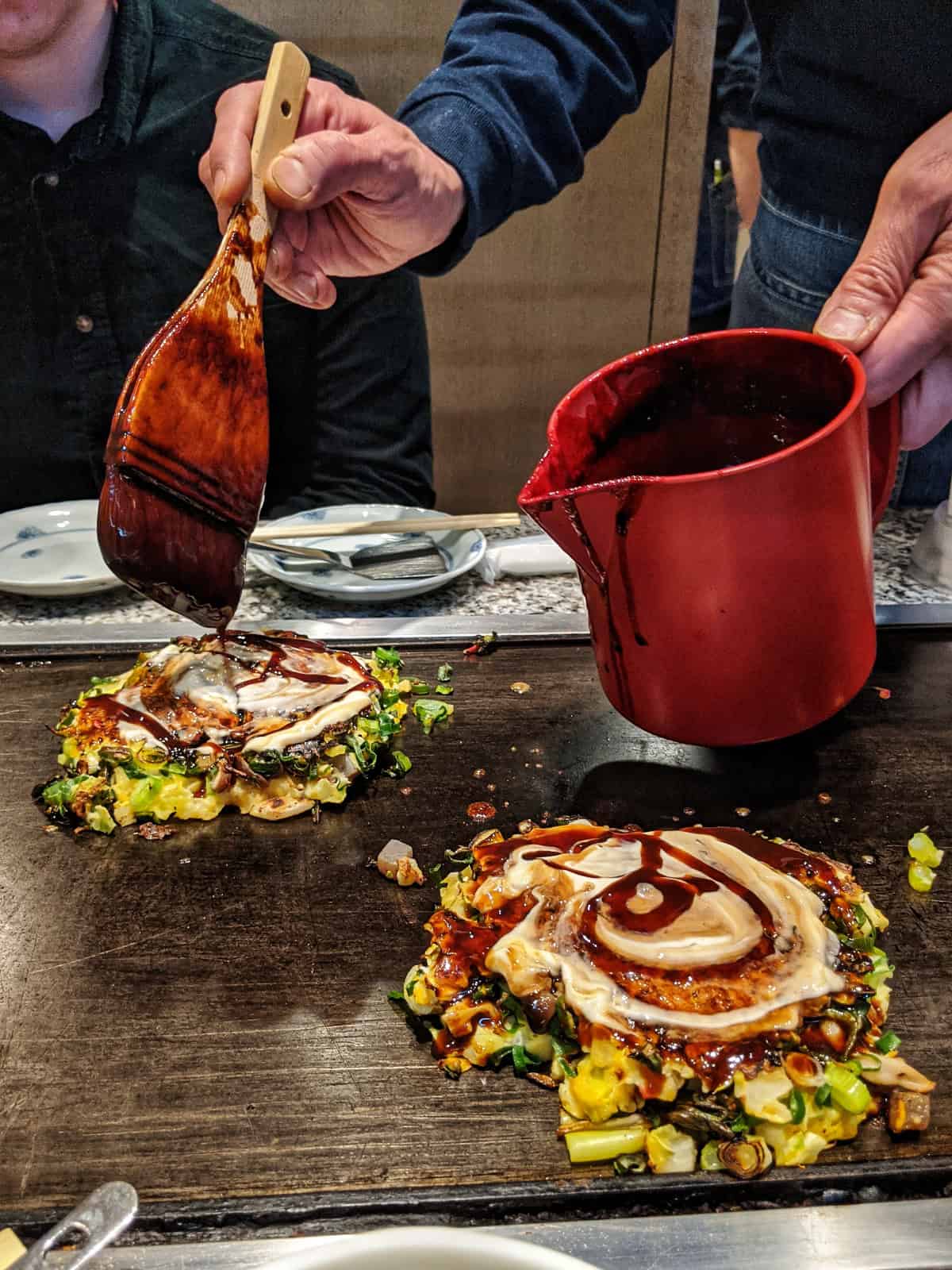
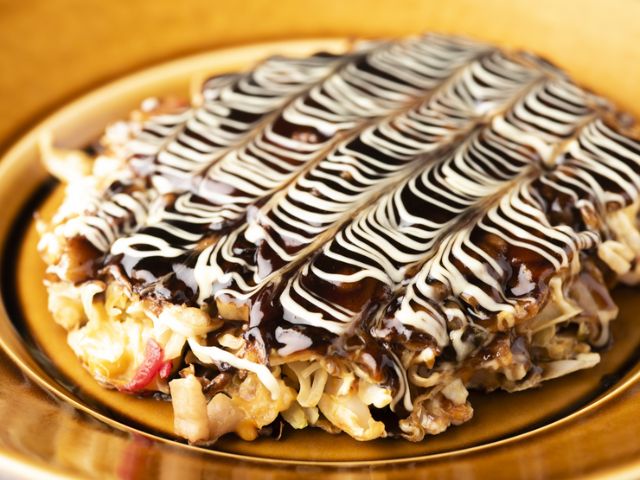
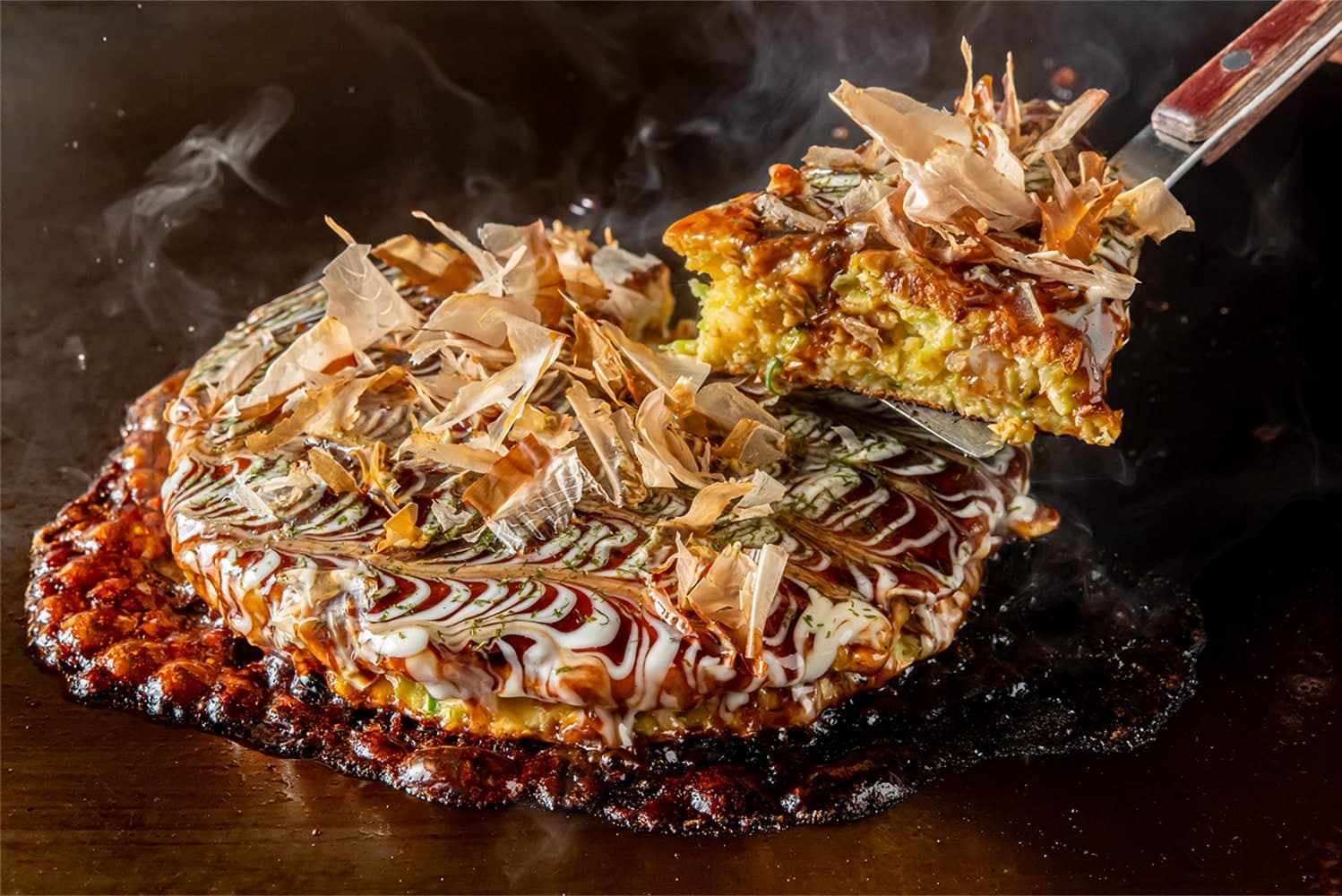
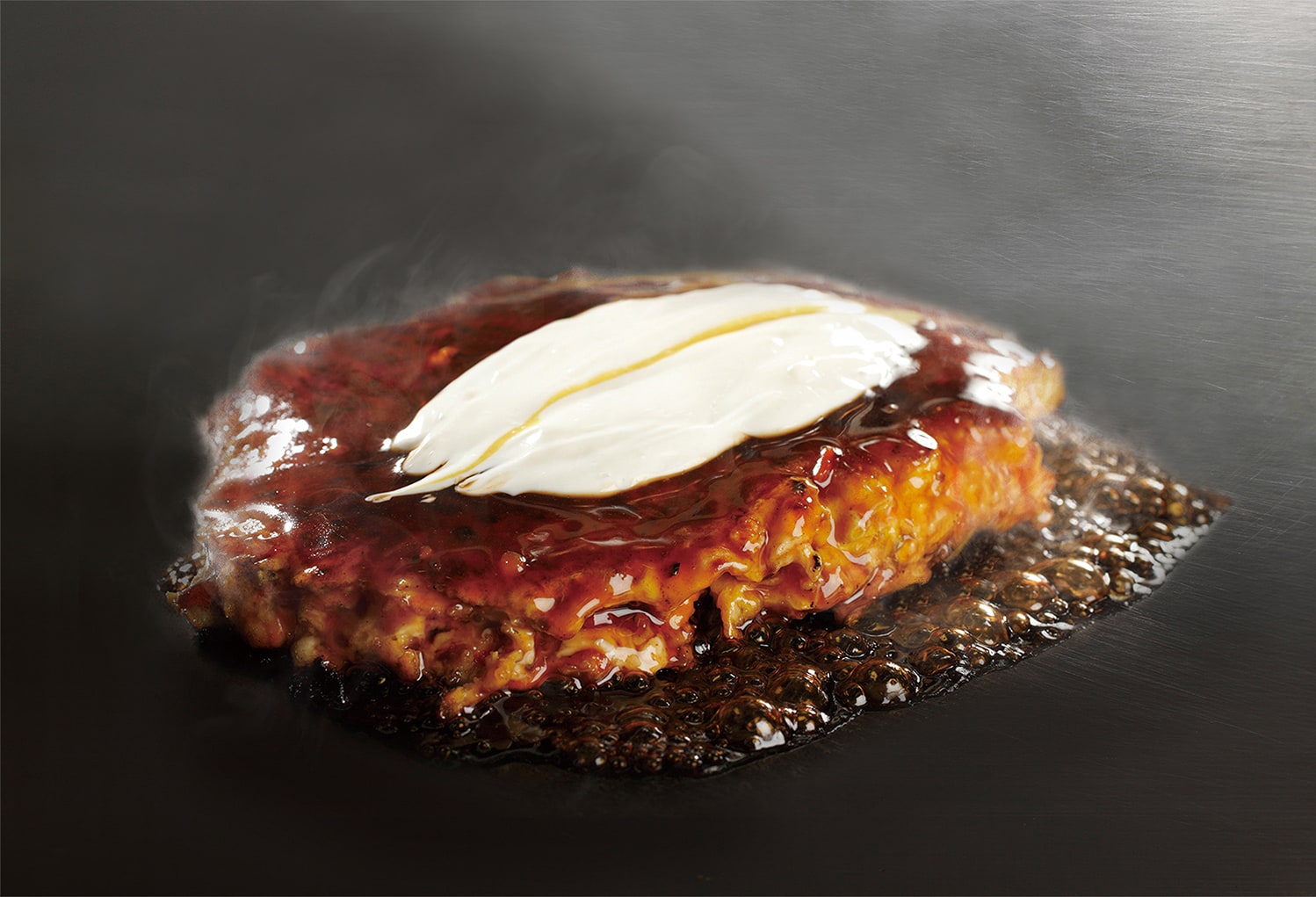
Okonomiyaki (Japanese: お好み焼き ) is a Japanese
teppanyaki savory pancake dish consisting of wheat flour batter and other ingredients (mixed, or as toppings) cooked on a
teppan (flat griddle). Common additions include cabbage, meat, and seafood, and toppings include
okonomiyaki sauce (made with Worcestershire sauce),
aonori (dried seaweed flakes),
katsuobushi (bonito flakes), Japanese mayonnaise, and pickled ginger.
Okonomiyaki has two main variants from Hiroshima and the Kansai region of Japan, but is widely available throughout the country, with toppings and batters varying by area. The name is derived from the word
okonomi, meaning "how you like" or "what you like", and
yaki, meaning "grilled". It is an example of
konamono (
konamon in the Kansai dialect), or flour-based Japanese cuisine.
snip
Takoyaki


 https://en.wikipedia.org/wiki/Takoyaki
Takoyaki
https://en.wikipedia.org/wiki/Takoyaki
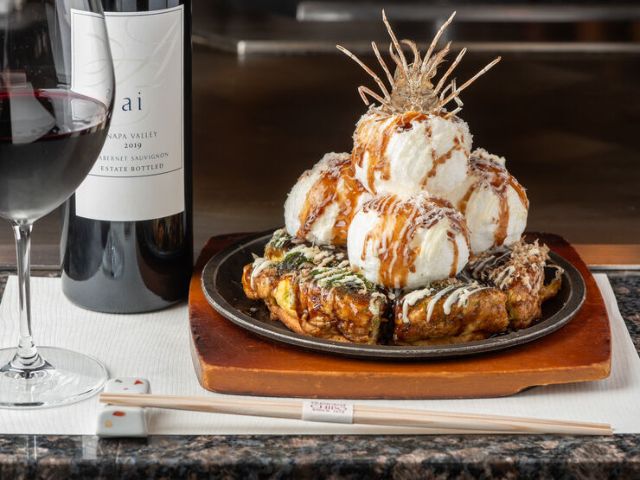
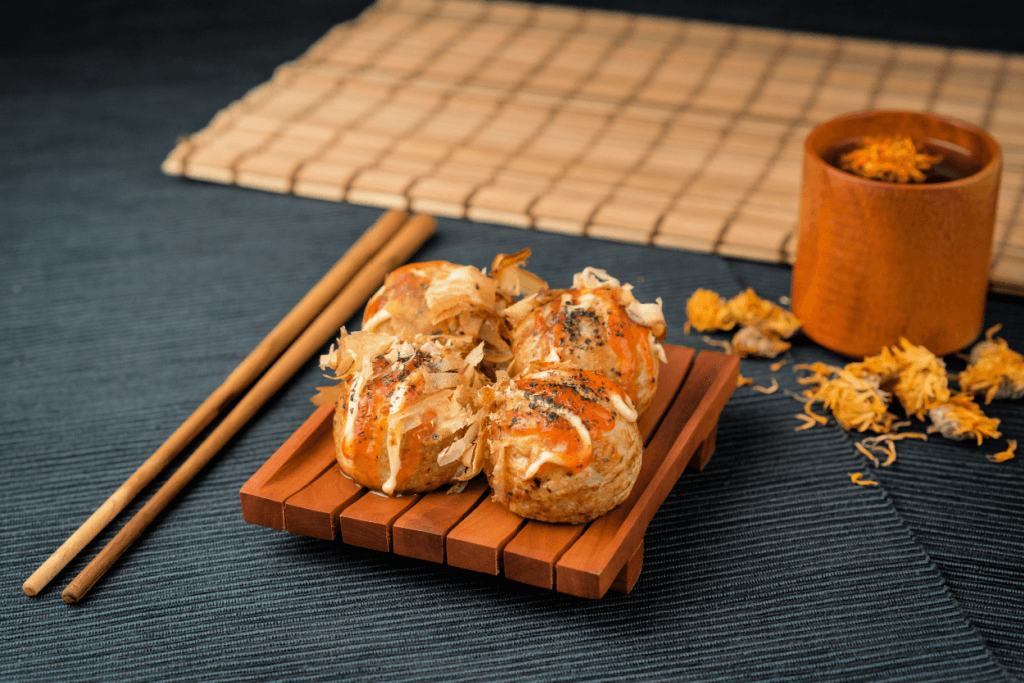
Takoyaki (Japanese: たこ焼き or 蛸焼 ) is a ball-shaped Japanese snack made of a wheat flour–based batter and cooked in a special molded pan. It is typically filled with minced or diced octopus (
tako), tempura scraps (
tenkasu), pickled ginger (
beni shoga), and green onion (
negi). The balls are brushed with
takoyaki sauce and mayonnaise, and then sprinkled with green laver (
aonori) and shavings of dried bonito (
katsuobushi).
Yaki ( 焼き ) is one of the cooking methods in Japanese cuisine, meaning 'to grill', and can be found in the names of other dishes in Japanese cuisine such as
okonomiyaki and
ikayaki (other famous Osakan dishes). Typically, it is eaten as a snack or between meals, but in some areas it is served as a side dish with rice. It is an example of
konamono (
konamon in the Kansai dialect), or flour-based Japanese cuisine.
snip

 = new reply since forum marked as read